
Hollywood and the “Loyalty Test”
When President Donald Trump publicly urged Netflix to remove Susan Rice from its board — warning that the company would “pay the consequences” if it refused — the episode ceased to concern an $83-billion acquisition.
It revealed something more fragile.
The catalyst was uncomplicated. Trump reposted a denunciation from far-right activist Laura Loomer on Truth Social. Loomer had seized on Rice’s podcast remarks, calling Netflix “anti-American” and “woke” for retaining her, urging the president to “kill the Netflix–Warner Bros. merger now.”
The repost was not accidental.
It was amplification.
Rice was labeled a “racist, Trump Deranged” political hack with “no talent or skills.”
The message was clear enough:
A corporate board seat had become contingent on ideological hygiene.
Thus a merger review turned into a loyalty examination.
And Hollywood — that factory of fiction — was handed a script written in executive ink.
The Inconvenient Resume
Susan Rice is not an obscure name wandering into controversy by chance.
She served as U.S. Ambassador to the United Nations and later as National Security Advisor under President Barack Obama. She later advised President Biden. Her résumé is not decorative. It is institutional.
Corporations do not appoint directors for poetry.
They appoint them for proximity to complexity.
When Netflix reappointed her in 2023 to its nominating and governance committee, it exercised what is ordinarily considered a banal corporate right: the freedom to decide who sits at its table.
In functioning democracies, that decision belongs to shareholders.
Not to the White House.
Yet here, a board appointment was treated less as governance and more as provocation.
Experience became suspicion.
Service became stigma.
Independence became defiance.
When Speech Becomes Subversion
On the podcast Stay Tuned with Preet Bharara, Rice observed that corporations “bending the knee” today might face scrutiny if political winds shift — should Democrats regain leverage in 2026 or 2028.
It was not a decree.
It was not a subpoena.
It was an observation about electoral gravity.
In American life, such commentary is routine.
But routine speech can feel radical to power that hears dissent as insubordination.
And so a podcast became pretext.
The essential question is not whether Rice’s assessment was wise.
It is why a sitting president treats commentary as contamination.
When public office reacts to criticism as though it were a hostile takeover, the issue is no longer speech.
It is sensitivity.
The Merger and the Message
The timing is instructive.
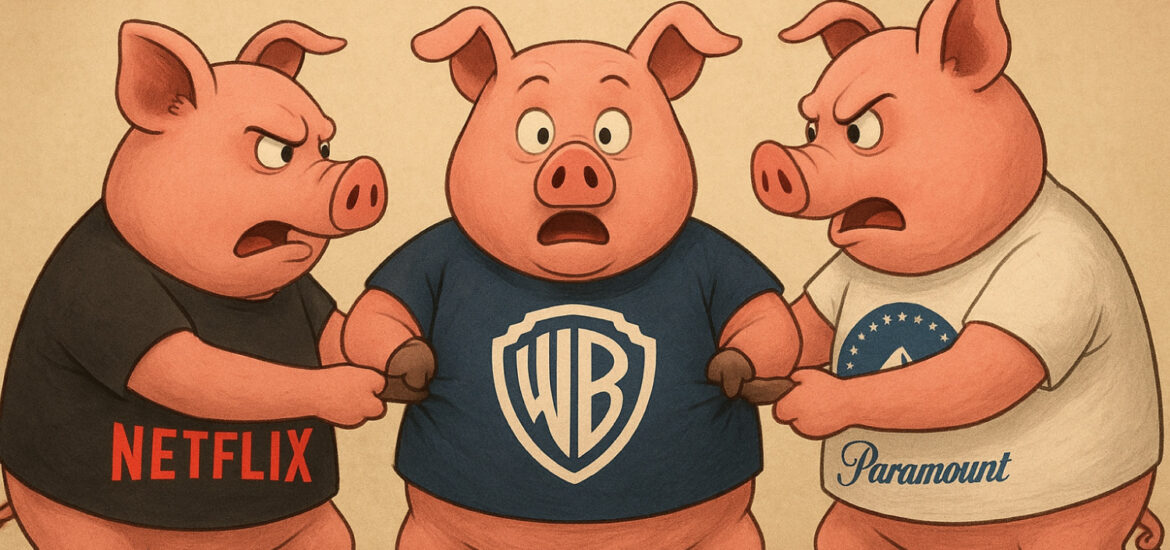
Netflix awaits federal review of its proposed acquisition of Warner Bros. Discovery — a transaction scrutinized by regulators amid a competitive media landscape that includes Paramount Global and Skydance.
Antitrust review is, in theory, statutory.
It is meant to weigh markets, not personalities.

But when “will pay the consequences” enters the vocabulary of review, the grammar shifts.
The market hears something else.
A threat does not require implementation to function.
Its purpose is anticipatory obedience.
In that moment, corporate governance begins to resemble political probation.
Editorial: Power and the Fear of Being Seen
There is an old paradox about authority:
Power rarely fears attack.
It fears exposure.
Attack can be dismissed as hostility.
Exposure demands introspection.
To be criticized is survivable.
To be examined is destabilizing.
When power insists that private institutions cleanse themselves of critics, it is not defending order.
It is defending comfort.
The loyalty test, then, is not about Netflix.
It is about whether proximity to dissent is itself intolerable.
If a board member’s prior service under a different administration is grounds for presidential displeasure, then continuity of government becomes a liability.
And if regulatory discretion coincides with personal irritation, then institutions are quietly instructed to anticipate mood.
This is how systems erode — not through spectacle, but through suggestion.
Not through decrees, but through consequences left undefined.
Hollywood produces dramas about fragile empires.
Yet here, the fragility is not scripted.
It is enacted.
Pettiness as Structure
Stable democracies do not require ideological purification rituals from corporations.
Confident leaders do not equate disagreement with betrayal.
When governance becomes indistinguishable from grievance, the state begins to look less like an institution and more like a personality extended across agencies.
And personalities, unlike constitutions, bruise easily.
In this story, Netflix is incidental.
Susan Rice is incidental.
The merger is incidental.
What is not incidental is the spectacle of executive authority reacting to commentary as though it were defiance.
The stress test is not for a streaming platform.
It is for whether presidential power can endure scrutiny without converting it into leverage.
Because when power cannot tolerate being watched,
it begins to rearrange the room.
And when it rearranges the room,
it calls the new arrangement order.
“Power does not tremble at opposition.
It trembles at inspection.
And when it confuses scrutiny with sabotage,
loyalty becomes its last refuge.”