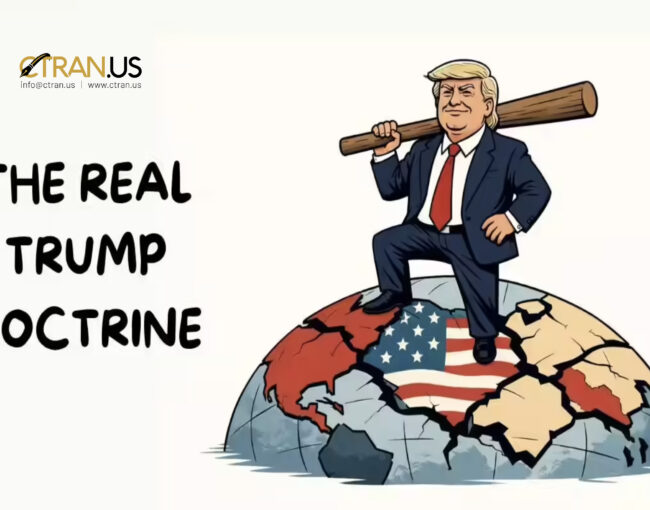


Trump’s MFN Drug Pricing Plan and the Conservative Revolt
What Happens When Free Market Advocates Push Back
More than fifty leaders from conservative and free-market organizations signed a letter to Congress on February 12 opposing the inclusion of the “Most-Favored-Nation” (MFN) drug pricing model into federal law.
Their warning was blunt: importing foreign drug price benchmarks into the United States amounts to adopting a form of indirect price control.
What makes the moment notable is not merely the policy debate.
It is who is objecting.
These are not progressive critics.
They are long-time defenders of market-based economics.
What Is the Most-Favored-Nation Drug Pricing Model?
The MFN model proposes that the United States would pay no more for certain prescription drugs than the lowest price paid by comparable developed nations.
The argument behind it is politically powerful:
If other countries pay less, why shouldn’t Americans?
On its surface, the proposal appears aligned with “America First” rhetoric — correcting what has often been described as global price imbalances.
But in economic terms, critics argue that MFN effectively imports foreign price ceilings into the U.S. system.
The Free Market Argument Against MFN
The conservative signatories frame their concern around incentives.
Their logic is straightforward:
Indirect price caps → lower margins → reduced capital for research and development → fewer breakthrough therapies.
Unlike most developed nations, the United States does not impose a centralized national price ceiling on pharmaceuticals. As a result, it has become:
The world’s largest biotech ecosystem
The primary global engine for pharmaceutical R&D
A strategic leader in biomedical innovation
Supporters of market pricing argue that higher U.S. drug prices have helped finance global innovation, allowing companies to recover research costs and fund future breakthroughs.
If margins are compressed significantly, they warn, the impact may extend beyond near-term pricing. It could affect long-term innovation capacity.
The Political Shift
The deeper story may not be about drug pricing alone.
It is about a widening gap between traditional free-market conservatism and economic populism.
For decades, conservative economic doctrine treated price controls as incompatible with supply-and-demand fundamentals.
The MFN proposal, critics argue, signals a shift — where political optics may outweigh strict market principles.
This places some within the conservative movement in a difficult position:
Loyalty to market orthodoxy
or
Alignment with populist policy outcomes.
The Real Trade-Off
Drug affordability is a legitimate public concern.
Americans do pay more for many prescription medications than citizens in other developed nations.
But the method of lowering prices carries consequences.
Price controls may reduce costs in the short term.
They may also alter long-term investment behavior.
Economic systems function on incentives.
Reduce the incentive to innovate, and innovation may slow.
Maintain high prices indefinitely, and access becomes constrained.
That is the real dilemma — not the headline percentage comparisons.
Every “golden era” eventually confronts the same question:
Who benefits?
And who bears the cost?
Our Commentary