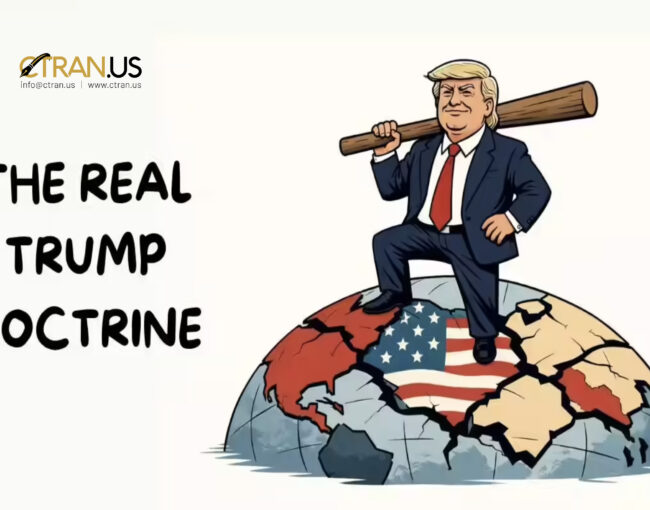


Power and the Chair are Higher than the One Who Sits
A republic survives not by strength alone, but by the discipline imposed upon strength.
The American presidency was never designed to be an instrument of personal triumph. It was designed to restrain ambition through structure, and to elevate character through limits. The Constitution distributes authority because it assumes something fundamental about human nature: power attracts those who desire it most—and desire rarely limits itself.
That tension between ambition and restraint is the current that runs through the republic’s defining moments.
When George Washington stepped away after two terms, he did more than retire. He established a moral boundary. There was no rule compelling him to leave. The nation would have followed him indefinitely. By relinquishing authority voluntarily, he demonstrated that the presidency was greater than the man who held it.
He understood something rare: legitimacy grows when power is surrendered at the right moment.
That act became a silent constitutional amendment of character—later formalized, but first practiced as virtue.
Decades later, during the Civil War, Abraham Lincoln faced a fractured nation. His challenge was not merely military victory, but moral reconstruction. He chose language that preserved dignity even amid rebellion. He spoke “with malice toward none” not because he lacked conviction, but because he understood that humiliation poisons peace.
Restraint, again, strengthened authority.
In the twentieth century, amid ideological confrontation, Ronald Reagan projected firmness toward the Soviet Union without abandoning diplomatic form. He separated ideological opposition from personal degradation. Even in rivalry, he maintained the grammar of respect that keeps conflict from dissolving into contempt.
And more recently, on Presidents’ Day, George W. Bush chose not to highlight policy achievements or electoral victories. Instead, he reflected on Washington’s humility—arguing that without his willingness to limit himself, there would be no America.
That choice of emphasis matters.
Because in the same era, the presidency is also framed differently. Achievements are cataloged. Metrics are displayed. Economic gains, border numbers, market records, and electoral dominance become central narratives. Leadership becomes performance measured in visible wins. Even presidential communication shifts from reflective letters to direct digital proclamations, as seen in the messaging style of Donald Trump.
These approaches reveal a philosophical divide—not merely political, but anthropological.
One vision sees power as validation: strength proven by visible dominance.
Another sees power as stewardship: strength proven by visible restraint.
The first seeks expansion.
The second seeks proportion.
Modern technology intensifies this tension. Algorithms reward immediacy, outrage, and clarity without nuance. Narrative becomes weaponized. Influence becomes constant. In such an environment, self-restraint appears inefficient. It does not trend. It does not energize crowds quickly.
Yet a republic cannot be sustained on adrenaline.
When leaders speak in contempt, even for opponents, the tone diffuses downward. Public discourse hardens. Citizens begin to mirror the language they hear from above. Allies measure not only trade terms, but dignity. Institutions feel either elevated—or diminished—by the temperament of those who occupy them.
This is not about personality. It is about architecture.
A constitutional system assumes that ambition must be countered by restraint. When restraint weakens, the system compensates with conflict. When leaders voluntarily limit themselves, the system stabilizes.
History suggests a pattern:
Power that advertises itself loudly rarely endures.
Power that disciplines itself quietly becomes tradition.
The presidency, like any high office, is not a throne. It is a trust. The chair is designed to outlive its occupants. Its height is measured not by how forcefully someone sits in it, but by how carefully they rise from it.
The difference between winning and leading is temporal. Winning dominates the present. Leading shapes the future.
A term lasts years.
A legacy lasts generations.
And legacy is shaped not by how much power one accumulates—but by how much one refuses to misuse.
“The man who hungers for power does not seek to serve the chair—he seeks to become taller than it.”
— Trump. A Curious Tale
Our Commentary