Category Archives: Political Language

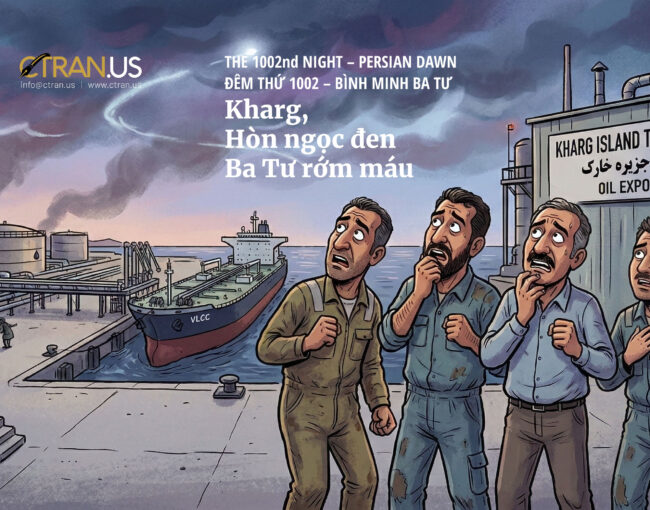
The 1002nd Nights — A Persian Dawn

Giới thiệu sách

Đêm Thứ 1002 — Bình Minh Ba Tư

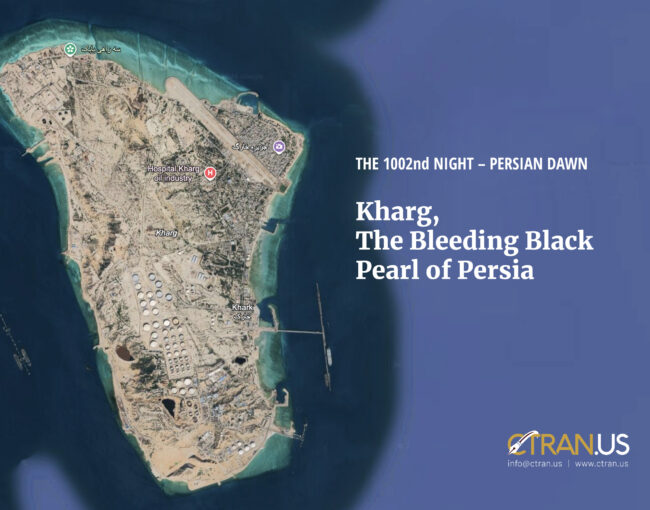
The Thousand and Second Night — A Persian Dawn By Calvin P. TranCó những câu chuyện không thể kết thúc sau một nghìn lẻ một đêm.Trong những năm gần đây... nhiều người phụ nữ đã lặng lẽ tháo khăn trùm đầu.Jin, Jiyan, Azadi. Woman. Life. Freedom....chọn cho mình một vai trò khiêm nhường hơn: Người Ghi Chép.Như nàng Shahrazad trong One Thousand and One Nights đã kể chuyện...
Đọc thử miễn phí
Read a free sample

Trump’s MFN Drug Pricing Plan

Trump’s MFN Drug Pricing Plan and the Conservative Revolt

By Calvin P. Tran

What Happens When Free Market Advocates Push Back

More than fifty leaders from conservative and free-market organizations signed a letter to Congress on February 12 opposing the inclusion of the “Most-Favored-Nation” (MFN) drug pricing model into federal law.

Their warning was blunt: importing foreign drug price benchmarks into the United States amounts to adopting a form of indirect price control.

What makes the moment notable is not merely the policy debate.

It is who is objecting.

These are not progressive critics.
They are long-time defenders of market-based economics.

What Is the Most-Favored-Nation Drug Pricing Model?

The MFN model proposes that the United States would pay no more for certain prescription drugs than the lowest price paid by comparable developed nations.

The argument behind it is politically powerful:
If other countries pay less, why shouldn’t Americans?

On its surface, the proposal appears aligned with “America First” rhetoric — correcting what has often been described as global price imbalances.

But in economic terms, critics argue that MFN effectively imports foreign price ceilings into the U.S. system.

The Free Market Argument Against MFN

The conservative signatories frame their concern around incentives.

Their logic is straightforward:

Indirect price caps → lower margins → reduced capital for research and development → fewer breakthrough therapies.

Unlike most developed nations, the United States does not impose a centralized national price ceiling on pharmaceuticals. As a result, it has become:

The world’s largest biotech ecosystem

The primary global engine for pharmaceutical R&D

A strategic leader in biomedical innovation

Supporters of market pricing argue that higher U.S. drug prices have helped finance global innovation, allowing companies to recover research costs and fund future breakthroughs.

If margins are compressed significantly, they warn, the impact may extend beyond near-term pricing. It could affect long-term innovation capacity.

The Political Shift

The deeper story may not be about drug pricing alone.

It is about a widening gap between traditional free-market conservatism and economic populism.

For decades, conservative economic doctrine treated price controls as incompatible with supply-and-demand fundamentals.

The MFN proposal, critics argue, signals a shift — where political optics may outweigh strict market principles.

This places some within the conservative movement in a difficult position:

Loyalty to market orthodoxy
or
Alignment with populist policy outcomes.

The Real Trade-Off

Drug affordability is a legitimate public concern.
Americans do pay more for many prescription medications than citizens in other developed nations.

But the method of lowering prices carries consequences.

Price controls may reduce costs in the short term.

They may also alter long-term investment behavior.

Economic systems function on incentives.
Reduce the incentive to innovate, and innovation may slow.
Maintain high prices indefinitely, and access becomes constrained.

That is the real dilemma — not the headline percentage comparisons.

Every “golden era” eventually confronts the same question:

Who benefits?
And who bears the cost?

JD Vance: Olympic 2026

Milano 2026 Winter Olympics–

when the American flag stirs more storm than the fireworks

By Calvin P. Tran

At San Siro Stadium, Milan, on February 6, 2026, the opening ceremony of the Milano–Cortina Winter Olympics delivered a brief, brutal piece of theater.

The U.S. delegation marched in—white Ralph Lauren uniforms gleaming, stars-and-stripes flag snapping in the wind. The 65,000-strong crowd erupted in cheers, roaring for the ice-and-snow heroes like they were gods of winter.

Then the jumbotron panned to the VIP box. Vice President JD Vance and his wife Usha appeared, waving tiny flags, smiling politely. In seconds the cheers flipped: boos, whistles, jeers rolled through the stadium like a sudden Alpine gale [1].

Not the first time a politician has been jeered at the Games. But in Italy—the land of opera and tragedy—it felt symbolic. Politics had crashed the party that, for twenty centuries, pretended to belong only to humanity.

From Air Force One

Trump tiên sinh sounded genuinely surprised: “That’s surprising because people like him… He wasn’t booed in this country” [2]. But Europe is not America. Here Vance stood for an administration that has warped the image of the United States—from iron-fisted immigration to pressure tactics and open threats against allies [3].

NBC’s U.S. broadcast did what it could. The audio mix softened the boos into background murmur, a gentle remix of reality [4]. The rest of the world heard it clearly. Americans heard… something smoother.

Outside the stadium, Milan was far from calm. For days thousands had gathered in protest against the presence of U.S. Immigration and Customs Enforcement (ICE) agents acting as security detail for the American delegation. Whistles, chants of “ICE out,” signs reading “Defend Minneapolis” filled the streets [5].

On February 6, hundreds marched to Piazza Leonardo da Vinci, singing Bruce Springsteen anthems while mocking what they called “the militia that kills”—a direct reference to high-profile ICE-related shootings in the United States, including the fatal incident in Minneapolis. Milan’s mayor, Beppe Sala, was blunt: “This is a force that kills people… Of course they are not welcome in Milan” [6].

By February 7, the protests escalated. Thousands marched from Piazzale Medaglie d’Oro toward the Olympic Village. A splinter group hurled flares and bottles, prompting police intervention [7].

The anger wasn’t only about ICE. Demonstrators also targeted the ballooning cost of the Games, environmental damage, and Israel’s participation—adding jeers for the Israeli team during the parade of nations [8].

The American delegation—led by Vance, joined by Secretary of State Marco Rubio and Ambassador Tilman Fertitta—tried to stay composed. Vance met Prime Minister Giorgia Meloni, visited athletes, and told them: “Everybody is rooting for you” [9]. Yet some U.S. competitors felt the chill. Freestyle skier Hunter Hess admitted mixed feelings about representing the country at this moment: “There’s a lot going on that I’m not a big fan of… It’s tough to represent right now” [10].

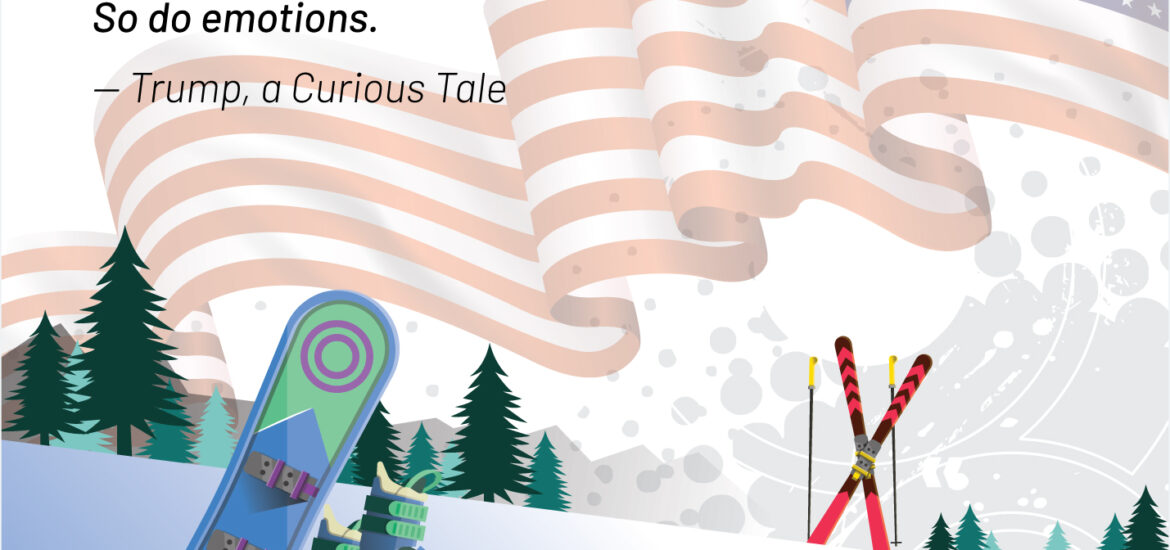
In Trump, a Curious Tale, this becomes a small but viciously ironic chapter: power believes it can wave the flag anywhere and be welcomed. The crowd has its own voice.

“When the flag flies, it doesn’t always carry glory.
Sometimes it drags shadow behind it.”
— Trump, Kỳ truyện

Glory for the athletes. Fury for the politics. The American flag in Milan stirred more storm than the fireworks.

And then, in the snowy Italian haze, power keeps smiling while the crowd keeps booing. No finale. Only an open ending—leaving the world to judge, and to sigh quietly over this endless Olympic drama.

Citations
  1. Reuters; The Guardian – Israel team, U.S. Vice President Vance booed at Milan Games opening ceremony (2026)
  2. Time Magazine – J.D. Vance Is Booed at the Winter Olympics (2026)
  3. NPR – U.S. steps onto Olympic stage at a time when its image sparks concern (2026)
  4. NBC News; The Washington Post; The Business Standard; YouTube – Two Versions of One Olympic Moment After JD Vance Is Booed (2026)
  5. Reuters; BBC – Anti-ICE protesters rally in Milan ahead of opening ceremony (2026)
  6. Italian media (La Repubblica, Corriere della Sera); YouTube compilations – Statements by Mayor Beppe Sala on ICE presence (2026)
  7. The Hill; USA Today – Police use tear gas, water cannons on protesters near Winter Olympics venue (2026)
  8. Middle East Monitor – Jeers target US, Israeli delegations during Winter Olympics opening ceremony (2026)
  9. Yahoo Sports – Everybody is rooting for you’: VP Vance leads US Olympics delegation (2026)
  10. Los Angeles Times – Amid protests over ICE at the Olympics, U.S. athletes brace for hostile crowds (2026)