Category Archives: Language & Responsibility

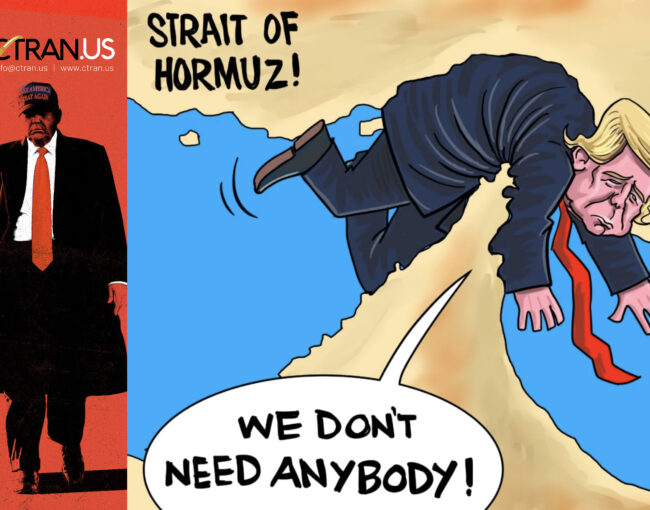
The Coin and the King Without a Crown

The Coin and the King Without a Crown

By Calvin P. Tran

America is preparing to mark its 250th anniversary—a milestone meant to honor institutions, history, and the principles that shaped a republic.

But this time, the story seems to orbit… a face.
Donald Trump.

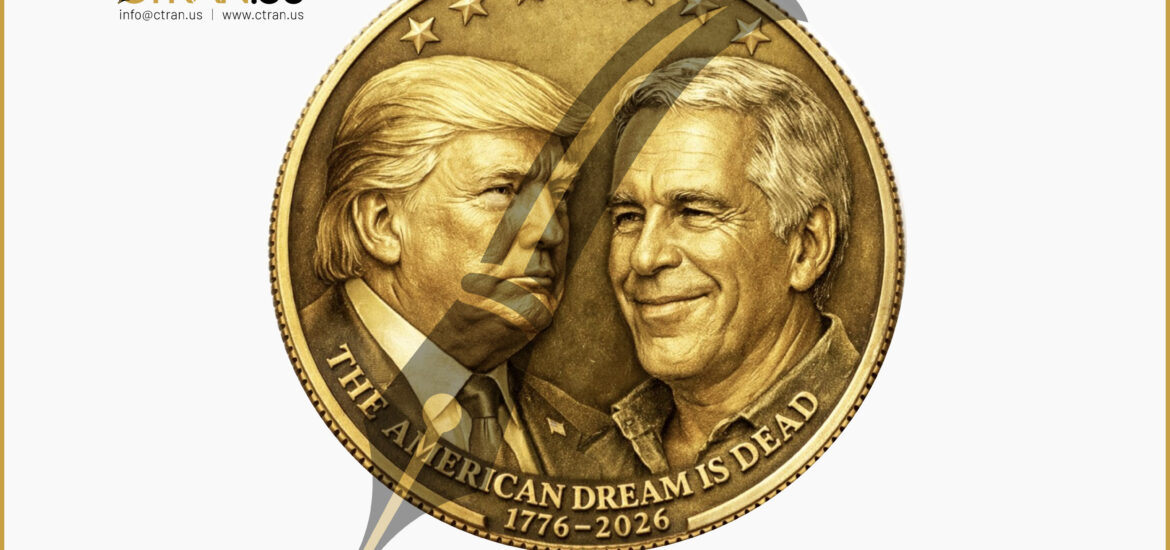
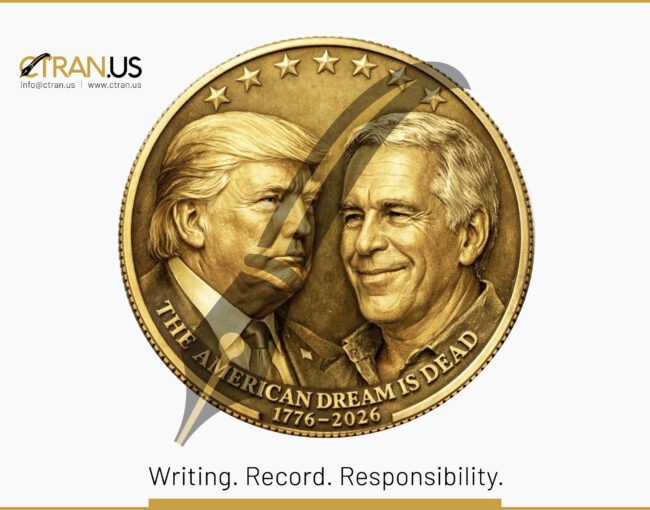
According to a proposal said to have passed through the U.S. Commission of Fine Arts—an agency once staffed by his own appointees—a commemorative gold coin has been designed with his portrait placed at its center.

An interesting choice.

Because while traditional American coins tend to depict figures who have already entered history, this time, history appears to have been invited… a little earlier than expected.

The reaction has not come from just one side.

A group known as Republicans Against Trump labeled it a sign of a “banana republic”—a place where national symbols begin to carry individual faces rather than shared principles.

On social media, public imagination moved even further than the original design:

  • Some merged the coin with the image of Jeffrey Epstein
  • Others turned it into childlike caricature
  • And some compared it to the propaganda aesthetics of North Korea

A coin—yet it becomes a mirror.

Former congressman Adam Kinzinger did not soften his words, calling the design “grasping”—an attempt to hold onto an image, or perhaps… a place in history.

What is notable is that the discomfort does not come solely from opponents, but also from those who once stood on the same side.

But perhaps the larger question is not the coin itself.
It is the boundary.
Between:

  • remembrance and reverence
  • national symbol and personal brand
  • a republic and… something closer to monarchy than many would care to admit

Two hundred years ago, America was built with a very clear fear:
the fear of a king.

Two hundred years later, there is no king.

And yet, from time to time…
there are coins that make people wonder:

Was that fear ever truly gone,
or has it simply… changed its form?

Hollywood and the “Loyalty Test”

Hollywood and the “Loyalty Test”

By Calvin P. Tran

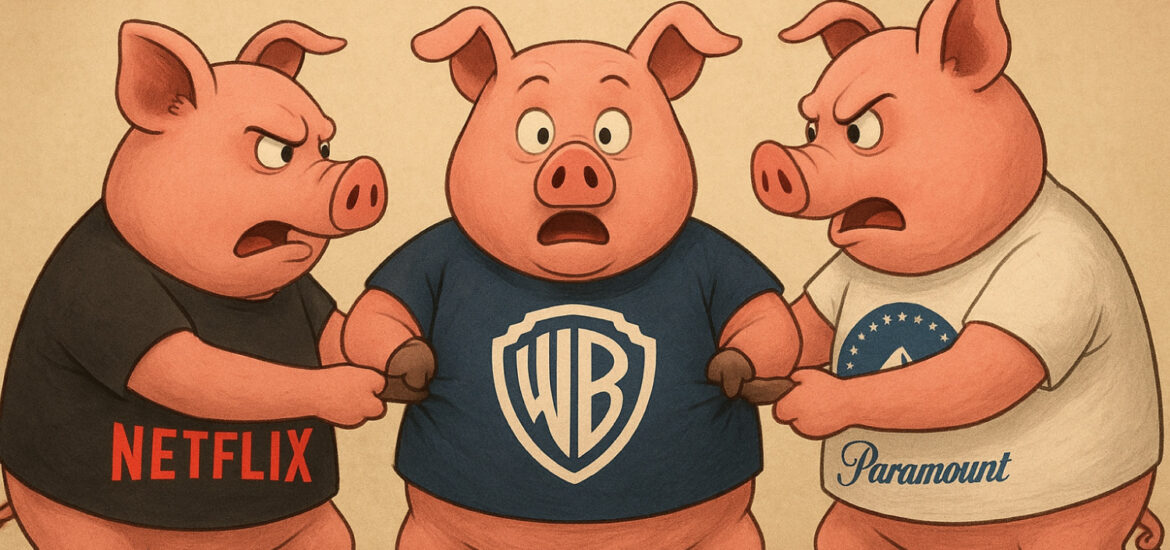
When President Donald Trump publicly urged Netflix to remove Susan Rice from its board — warning that the company would “pay the consequences” if it refused — the episode ceased to concern an $83-billion acquisition.

It revealed something more fragile.

The catalyst was uncomplicated. Trump reposted a denunciation from far-right activist Laura Loomer on Truth Social. Loomer had seized on Rice’s podcast remarks, calling Netflix “anti-American” and “woke” for retaining her, urging the president to “kill the Netflix–Warner Bros. merger now.”

The repost was not accidental.
It was amplification.

Rice was labeled a “racist, Trump Deranged” political hack with “no talent or skills.”

The message was clear enough:
A corporate board seat had become contingent on ideological hygiene.

Thus a merger review turned into a loyalty examination.
And Hollywood — that factory of fiction — was handed a script written in executive ink.

The Inconvenient Resume

Susan Rice is not an obscure name wandering into controversy by chance.

She served as U.S. Ambassador to the United Nations and later as National Security Advisor under President Barack Obama. She later advised President Biden. Her résumé is not decorative. It is institutional.

Corporations do not appoint directors for poetry.
They appoint them for proximity to complexity.

When Netflix reappointed her in 2023 to its nominating and governance committee, it exercised what is ordinarily considered a banal corporate right: the freedom to decide who sits at its table.

In functioning democracies, that decision belongs to shareholders.
Not to the White House.

Yet here, a board appointment was treated less as governance and more as provocation.

Experience became suspicion.
Service became stigma.
Independence became defiance.

When Speech Becomes Subversion

On the podcast Stay Tuned with Preet Bharara, Rice observed that corporations “bending the knee” today might face scrutiny if political winds shift — should Democrats regain leverage in 2026 or 2028.

It was not a decree.
It was not a subpoena.
It was an observation about electoral gravity.

In American life, such commentary is routine.

But routine speech can feel radical to power that hears dissent as insubordination.

And so a podcast became pretext.

The essential question is not whether Rice’s assessment was wise.

It is why a sitting president treats commentary as contamination.

When public office reacts to criticism as though it were a hostile takeover, the issue is no longer speech.
It is sensitivity.

The Merger and the Message

The timing is instructive.

Netflix awaits federal review of its proposed acquisition of Warner Bros. Discovery — a transaction scrutinized by regulators amid a competitive media landscape that includes Paramount Global and Skydance.

Antitrust review is, in theory, statutory.
It is meant to weigh markets, not personalities.

But when “will pay the consequences” enters the vocabulary of review, the grammar shifts.

The market hears something else.

A threat does not require implementation to function.
Its purpose is anticipatory obedience.

In that moment, corporate governance begins to resemble political probation.

Editorial: Power and the Fear of Being Seen

There is an old paradox about authority:
Power rarely fears attack.
It fears exposure.

Attack can be dismissed as hostility.
Exposure demands introspection.

To be criticized is survivable.
To be examined is destabilizing.

When power insists that private institutions cleanse themselves of critics, it is not defending order.
It is defending comfort.

The loyalty test, then, is not about Netflix.

It is about whether proximity to dissent is itself intolerable.

If a board member’s prior service under a different administration is grounds for presidential displeasure, then continuity of government becomes a liability.

And if regulatory discretion coincides with personal irritation, then institutions are quietly instructed to anticipate mood.

This is how systems erode — not through spectacle, but through suggestion.

Not through decrees, but through consequences left undefined.

Hollywood produces dramas about fragile empires.
Yet here, the fragility is not scripted.

It is enacted.

Pettiness as Structure

Stable democracies do not require ideological purification rituals from corporations.

Confident leaders do not equate disagreement with betrayal.

When governance becomes indistinguishable from grievance, the state begins to look less like an institution and more like a personality extended across agencies.

And personalities, unlike constitutions, bruise easily.

In this story, Netflix is incidental.

Susan Rice is incidental.

The merger is incidental.

What is not incidental is the spectacle of executive authority reacting to commentary as though it were defiance.

The stress test is not for a streaming platform.

It is for whether presidential power can endure scrutiny without converting it into leverage.

Because when power cannot tolerate being watched,
it begins to rearrange the room.

And when it rearranges the room,
it calls the new arrangement order.

“Power does not tremble at opposition.
It trembles at inspection.
And when it confuses scrutiny with sabotage,
loyalty becomes its last refuge.”
— Trump, a Curious Tale

Trump’s Tariffs: The Bill Comes Home

Trump’s Tariffs: The Bill Comes Home

By Calvin P. Tran

Trump once promised something deceptively simple:
Impose tariffs.
Foreigners will pay.
Americans will enjoy the victory.

It sounded like fiscal alchemy.
The only problem is that economics does not believe in magic.

A February 12, 2026 report from the Federal Reserve Bank of New York found that nearly 90% of the burden from the 2025 tariffs fell on U.S. businesses and consumers.
From January to August: 94%.
By November: still 86%.

Foreign exporters did not “pay the bill.”
They adjusted prices, restructured supply chains, and diversified markets.
American households, meanwhile, found the invoice in their mailbox. [1]

The Congressional Budget Office was even more clinical.
Roughly 30% of the cost was absorbed by U.S. firms through reduced profits.
About 70% was passed directly to consumers in the form of higher prices.
The share borne by foreign exporters: about 5%.

Five percent.
A modest number for a very large promise.

Trump said, “They will pay.”
The CBO replied with spreadsheets. [2]

According to the Tax Foundation, the average American household paid roughly $1,000 more in 2025 due to tariffs.
In 2026, that figure may rise to $1,300.

“Prices will fall on day one”?
They did — for eggs.
Thanks to improved supply after avian flu was brought under better control, not because tariffs disappeared.
Economics has a quiet sense of humor. [3]

Washington began to feel the strain.

On February 11, 2026, the House voted 219–211 to block tariffs on Canada.
Six Republicans — Thomas Massie, Don Bacon, Kevin Kiley, Brian Fitzpatrick, Jeff Hurd, and Dan Newhouse — joined Democrats.

Trump warned of “serious consequences.”
But even loyal parties occasionally rediscover arithmetic. [4]

The matter now awaits review by the Supreme Court of the United States.
If the Court rules against the administration’s emergency tariff authority, the entire structure could unravel.

The White House maintains that inflation has cooled, corporate profits have stabilized, and growth remains strong — even as average tariff rates have increased nearly sevenfold.

In January 2026, the economy added 130,000 jobs, according to the Bureau of Labor Statistics.
Yet 82,000 came from healthcare.
42,000 from social assistance.
In 2025, those sectors accounted for roughly 97% of job growth.

Economist Diane Swonk of KPMG described the structure as a “one-legged stool”: growth resting heavily on healthcare, affluent consumer spending, and massive AI investment.

One one-legged stool can stand — if balanced carefully.
Three one-legged stools side by side may look stable.
But physics does not respond to slogans.

Trump promised to make America great again.
Tariffs were the weapon of choice.
The difficulty is recoil.

Businesses compress margins.
Consumers pay more.
Foreign exporters adapt.

The economy keeps running.
But it runs on one-legged stools.
And one-legged stools do not need enemies — only time.

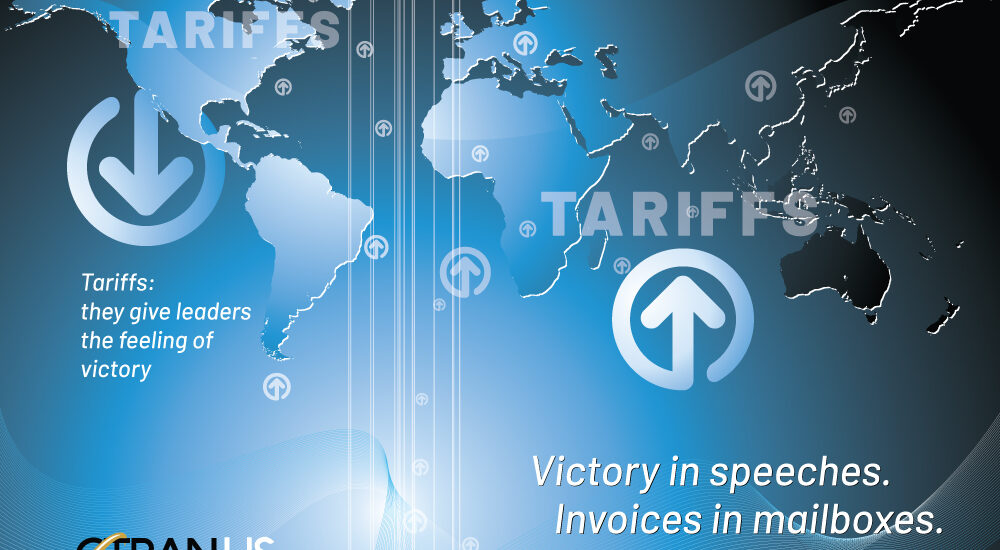
“Tariffs are a peculiar tax:
they give leaders the feeling of victory
and households the reality of a receipt.

When someone says foreigners will pay it all,
check your grocery bill.”
— Trump, a Curious Tale

CITATIONS
  1. Federal Reserve Bank of New York, Liberty Street Economics: “Who Is Paying for the 2025 U.S. Tariffs?”, 12/2/2026.
  2. Congressional Budget Office: “The Budget and Economic Outlook: 2026 to 2036”, 11/2/2026.
  3. Tax Foundation: “Trump Tariffs: Tracking the Economic Impact”, cập nhật 2026.
  4. CNN/Politico: “Six House Republicans defy Trump to block his Canada tariffs”, 11/2/2026.

The “Trump Economy”

The “Trump Economy”: Between Rhetoric and Reality

By Calvin P. Tran

In the theatre of modern governance, Trump tiên sinh has mastered a particular conjuring trick:

Transforming numbers into neon words, and neon words into public belief.
Yet, as any seasoned illusionist knows, the spectacle is only as convincing as the audience’s willingness to suspend disbelief.

At the World Economic Forum in Davos and in a series of speeches back home, Trump tiên sinh repeatedly declared that inflation had been “beaten” and prices were collapsing, often nearly twenty times in economic addresses since late 2025. These pronouncements, however flamboyant, stood in stark contrast to the lived experience of many Americans, who continued to grapple with stubborn costs of essentials like food and housing — a disconnect between rhetoric and reality that was hard to ignore. [1]

“The loudest proclamation is not always the closest neighbor of truth.”
— Trump, Kỳ truyện

Surveys and polls suggest that a significant segment of the population remained unconvinced by the economic narrative offered by Trump’s administration. A Pew Research Center study in early 2026 revealed that a majority of U.S. adults still viewed economic conditions as “only fair” or “poor,” with widespread concern about healthcare, food, and consumer prices. Despite optimistic spin, nearly three out of four respondents gave negative ratings to the nation’s economic performance.

Consumer sentiment, another key barometer, painted a similar picture of unease. Confidence levels in early 2026 remained significantly below historical norms, with some readings showing sentiment at its lowest in more than a decade. This indicated that households were not uniformly buoyed by the rosy growth figures advanced in government statements.

Meanwhile, even as GDP data showed periods of above-trend growth — such as a 4.4% expansion in the third quarter of 2025 — these figures were selectively wielded in speeches and press releases to suggest an economy “exploding” with vitality. But the broader economic mosaic was more mixed: strong headline numbers could not fully mask underlying anxieties about job prospects, inflation expectations, and uneven gains across different income groups.

“A tapestry of statistics can be woven into whatever pattern the weaver desires,
but the warp of lived experience remains unaltered.”
— Trump, Kỳ truyện

This rhetorical flourish has political consequences. As Trump’s administration leaned ever harder into bold claims of economic triumph, public approval on economic issues struggled to keep pace. Polling into early 2026 indicated relatively low approval ratings for the president’s handling of the economy — a sign that, for many, the applause line had already faded.

Thus the Trump Economy, as narrated by Trump tiên sinh, became less a coherent macroeconomic doctrine and more a mirror reflecting the tension between political language and personal reality. In this mirror, data points were refracted into slogans, and everyday struggles were overshadowed by booming verbiage untethered from the ground truth of household finances.

“An economy may be rich in charts,
yet poor in the judgment of its people.”
— Trump, Kỳ truyện

And so, this chapter closes not with a triumphant crescendo but with a quiet note of reflection:
the tale of an economy at odds with its own storyteller, where the brightest rhetoric cast the longest shadows over public trust.

Citations
  1. Reuters overview of Trump claiming inflation victory repeatedly despite consumer price pressures and voter skepticism.
  2. Pew Research Center report showing the majority of negative economic assessments among Americans in early 2026.
  3. Consumer confidence surveys indicating significant declines, reflective of lived economic unease.