Category Archives: Ethics & Power

The Coin and the King Without a Crown

The Coin and the King Without a Crown

By Calvin P. Tran

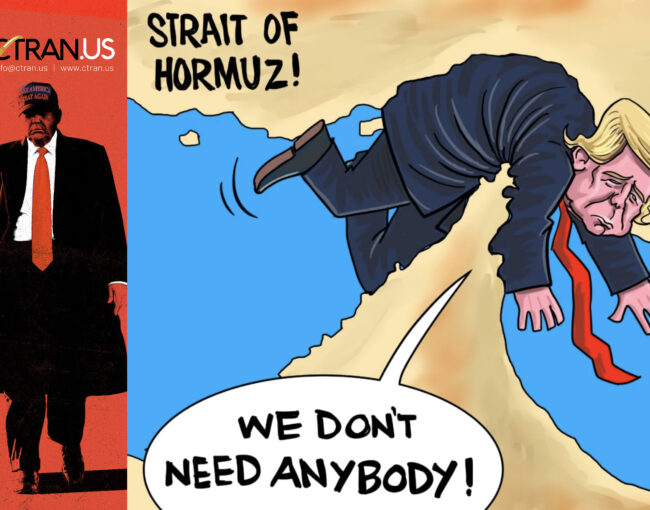
America is preparing to mark its 250th anniversary—a milestone meant to honor institutions, history, and the principles that shaped a republic.

But this time, the story seems to orbit… a face.
Donald Trump.

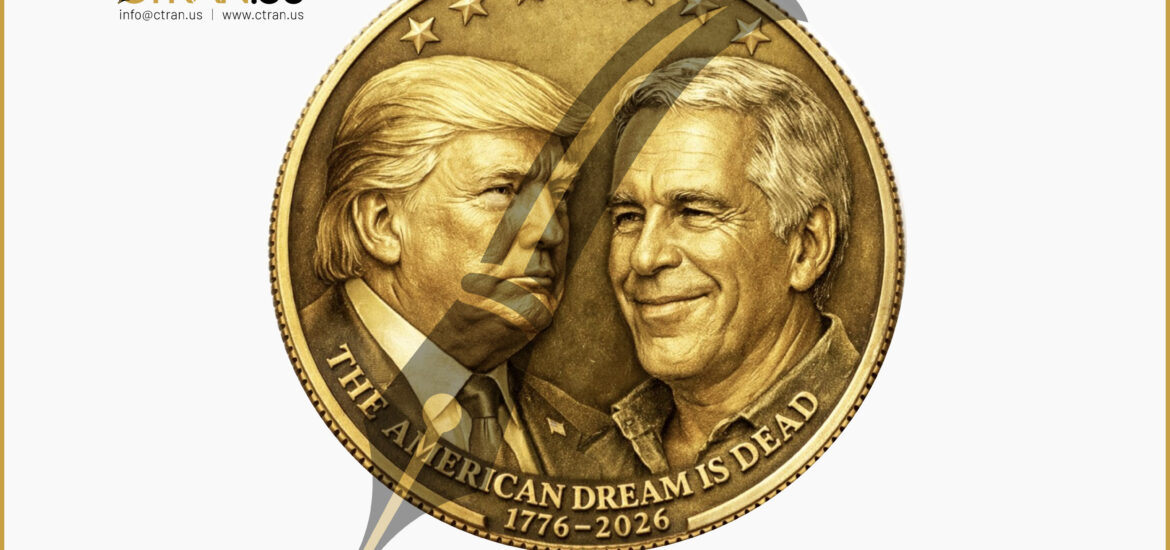
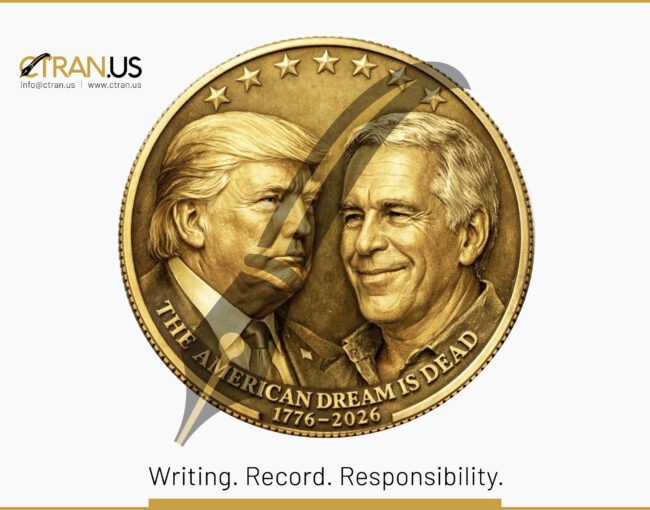
According to a proposal said to have passed through the U.S. Commission of Fine Arts—an agency once staffed by his own appointees—a commemorative gold coin has been designed with his portrait placed at its center.

An interesting choice.

Because while traditional American coins tend to depict figures who have already entered history, this time, history appears to have been invited… a little earlier than expected.

The reaction has not come from just one side.

A group known as Republicans Against Trump labeled it a sign of a “banana republic”—a place where national symbols begin to carry individual faces rather than shared principles.

On social media, public imagination moved even further than the original design:

  • Some merged the coin with the image of Jeffrey Epstein
  • Others turned it into childlike caricature
  • And some compared it to the propaganda aesthetics of North Korea

A coin—yet it becomes a mirror.

Former congressman Adam Kinzinger did not soften his words, calling the design “grasping”—an attempt to hold onto an image, or perhaps… a place in history.

What is notable is that the discomfort does not come solely from opponents, but also from those who once stood on the same side.

But perhaps the larger question is not the coin itself.
It is the boundary.
Between:

  • remembrance and reverence
  • national symbol and personal brand
  • a republic and… something closer to monarchy than many would care to admit

Two hundred years ago, America was built with a very clear fear:
the fear of a king.

Two hundred years later, there is no king.

And yet, from time to time…
there are coins that make people wonder:

Was that fear ever truly gone,
or has it simply… changed its form?

Hollywood and the “Loyalty Test”

Hollywood and the “Loyalty Test”

By Calvin P. Tran

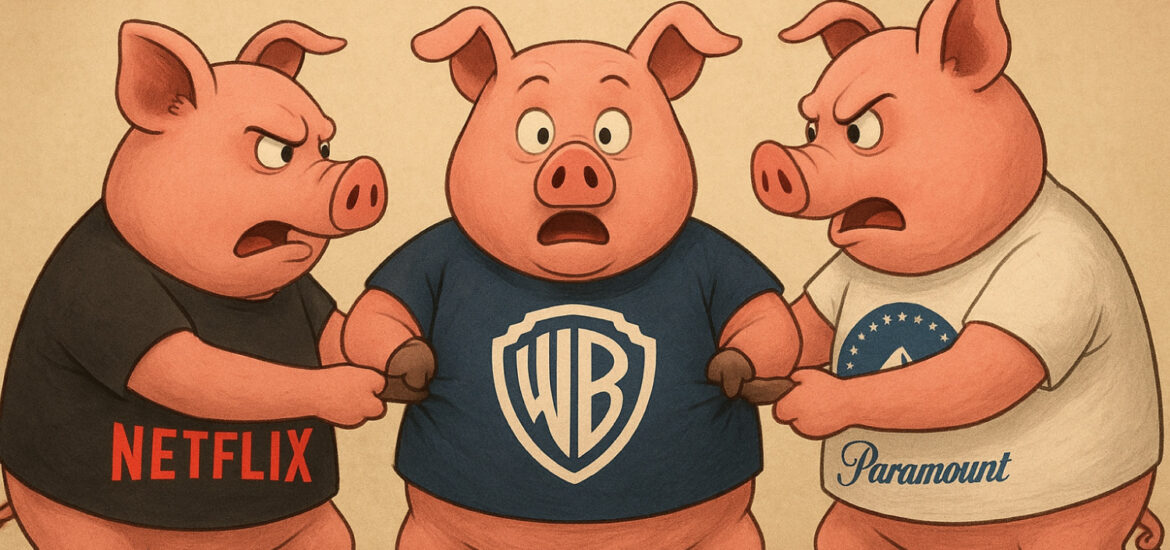
When President Donald Trump publicly urged Netflix to remove Susan Rice from its board — warning that the company would “pay the consequences” if it refused — the episode ceased to concern an $83-billion acquisition.

It revealed something more fragile.

The catalyst was uncomplicated. Trump reposted a denunciation from far-right activist Laura Loomer on Truth Social. Loomer had seized on Rice’s podcast remarks, calling Netflix “anti-American” and “woke” for retaining her, urging the president to “kill the Netflix–Warner Bros. merger now.”

The repost was not accidental.
It was amplification.

Rice was labeled a “racist, Trump Deranged” political hack with “no talent or skills.”

The message was clear enough:
A corporate board seat had become contingent on ideological hygiene.

Thus a merger review turned into a loyalty examination.
And Hollywood — that factory of fiction — was handed a script written in executive ink.

The Inconvenient Resume

Susan Rice is not an obscure name wandering into controversy by chance.

She served as U.S. Ambassador to the United Nations and later as National Security Advisor under President Barack Obama. She later advised President Biden. Her résumé is not decorative. It is institutional.

Corporations do not appoint directors for poetry.
They appoint them for proximity to complexity.

When Netflix reappointed her in 2023 to its nominating and governance committee, it exercised what is ordinarily considered a banal corporate right: the freedom to decide who sits at its table.

In functioning democracies, that decision belongs to shareholders.
Not to the White House.

Yet here, a board appointment was treated less as governance and more as provocation.

Experience became suspicion.
Service became stigma.
Independence became defiance.

When Speech Becomes Subversion

On the podcast Stay Tuned with Preet Bharara, Rice observed that corporations “bending the knee” today might face scrutiny if political winds shift — should Democrats regain leverage in 2026 or 2028.

It was not a decree.
It was not a subpoena.
It was an observation about electoral gravity.

In American life, such commentary is routine.

But routine speech can feel radical to power that hears dissent as insubordination.

And so a podcast became pretext.

The essential question is not whether Rice’s assessment was wise.

It is why a sitting president treats commentary as contamination.

When public office reacts to criticism as though it were a hostile takeover, the issue is no longer speech.
It is sensitivity.

The Merger and the Message

The timing is instructive.

Netflix awaits federal review of its proposed acquisition of Warner Bros. Discovery — a transaction scrutinized by regulators amid a competitive media landscape that includes Paramount Global and Skydance.

Antitrust review is, in theory, statutory.
It is meant to weigh markets, not personalities.

But when “will pay the consequences” enters the vocabulary of review, the grammar shifts.

The market hears something else.

A threat does not require implementation to function.
Its purpose is anticipatory obedience.

In that moment, corporate governance begins to resemble political probation.

Editorial: Power and the Fear of Being Seen

There is an old paradox about authority:
Power rarely fears attack.
It fears exposure.

Attack can be dismissed as hostility.
Exposure demands introspection.

To be criticized is survivable.
To be examined is destabilizing.

When power insists that private institutions cleanse themselves of critics, it is not defending order.
It is defending comfort.

The loyalty test, then, is not about Netflix.

It is about whether proximity to dissent is itself intolerable.

If a board member’s prior service under a different administration is grounds for presidential displeasure, then continuity of government becomes a liability.

And if regulatory discretion coincides with personal irritation, then institutions are quietly instructed to anticipate mood.

This is how systems erode — not through spectacle, but through suggestion.

Not through decrees, but through consequences left undefined.

Hollywood produces dramas about fragile empires.
Yet here, the fragility is not scripted.

It is enacted.

Pettiness as Structure

Stable democracies do not require ideological purification rituals from corporations.

Confident leaders do not equate disagreement with betrayal.

When governance becomes indistinguishable from grievance, the state begins to look less like an institution and more like a personality extended across agencies.

And personalities, unlike constitutions, bruise easily.

In this story, Netflix is incidental.

Susan Rice is incidental.

The merger is incidental.

What is not incidental is the spectacle of executive authority reacting to commentary as though it were defiance.

The stress test is not for a streaming platform.

It is for whether presidential power can endure scrutiny without converting it into leverage.

Because when power cannot tolerate being watched,
it begins to rearrange the room.

And when it rearranges the room,
it calls the new arrangement order.

“Power does not tremble at opposition.
It trembles at inspection.
And when it confuses scrutiny with sabotage,
loyalty becomes its last refuge.”
— Trump, a Curious Tale


Power Without Shame

When Power Loses the Capacity for Shame

By Calvin P. Tran

A president can make mistakes.
But there are moments that do not allow for error.
They are not political missteps.
They are moral choices.

The decision by Mr. Trump to post — or to allow the posting of — a video depicting Barack Obama, the 44th President of the United States and a two-term former president, together with his wife Michelle Obama, portrayed as apes, on the official Truth Social account of a sitting U.S. president, is not a “communications error.”

It is a moral threshold.

And it forces three unavoidable questions:
What does the family endure?
What does society absorb?
And how does the world now look at America?

I. Family Ethics: When Shame Enters the Home

Begin where ethics hurt the most: the family.

What does a wife feel
seeing such content distributed under her husband’s name —
a president’s name?

What do children learn
when their father is not simply wrong,
but shows no sense of shame?

This is not the embarrassment of losing power
or being criticized by opponents.
It is the humiliation of smallness —
of cruelty that serves no purpose
except release.

Within a family, law is unnecessary.
The eyes of one’s children are judgment enough.

How does a father speak of honor
when he evades responsibility?
How does a husband speak of values
while hiding behind familiar phrases:
“I didn’t know.”
“My staff posted it.”
“I didn’t watch it.”
At the family level,
this is not politics.
It is disgrace.

II. Social Ethics: When a Community Needs No Explanation

For Black Americans,
no explanation is required.

The comparison of Black people to apes
is not ambiguity.
It is history —
a long record of degradation,
violence,
and systematic dehumanization.

The wound is not only the image.
It is what followed.

No apology.
No acknowledgment.
Only deletion —
and blame displaced onto nameless aides.

In any society,
when power refuses accountability,
insult becomes precedent.
And precedent spreads.

III. Presidential Ethics: When the World Is Forced into Silence

Globally, an American president
is not read as an ordinary leader.
He is a signal.

Many world leaders found this act contemptible.
But they did not speak.

Not out of agreement —
but out of fear.

Fear of retaliation
against trade,
economies,
ordinary citizens.

This silence is not moral failure.
It is political restraint —
chosen to protect the vulnerable.

And that imbalance is precisely the point.

A president is not accountable only to voters,
but to the climate of fear
his conduct creates beyond borders.

Conclusion

A single post
will not collapse a nation.

But it can reveal something far more dangerous:

Power that has lost the capacity for shame
will soon lose the capacity to stop.
— Trump, a Curious Tale

Editorial Note

This text is presented as part of a public record.
It is not advocacy, nor accusation.
It is an ethical observation — preserved for those who cannot safely speak.

JD Vance: Olympic 2026

Milano 2026 Winter Olympics–

when the American flag stirs more storm than the fireworks

By Calvin P. Tran

At San Siro Stadium, Milan, on February 6, 2026, the opening ceremony of the Milano–Cortina Winter Olympics delivered a brief, brutal piece of theater.

The U.S. delegation marched in—white Ralph Lauren uniforms gleaming, stars-and-stripes flag snapping in the wind. The 65,000-strong crowd erupted in cheers, roaring for the ice-and-snow heroes like they were gods of winter.

Then the jumbotron panned to the VIP box. Vice President JD Vance and his wife Usha appeared, waving tiny flags, smiling politely. In seconds the cheers flipped: boos, whistles, jeers rolled through the stadium like a sudden Alpine gale [1].

Not the first time a politician has been jeered at the Games. But in Italy—the land of opera and tragedy—it felt symbolic. Politics had crashed the party that, for twenty centuries, pretended to belong only to humanity.

From Air Force One

Trump tiên sinh sounded genuinely surprised: “That’s surprising because people like him… He wasn’t booed in this country” [2]. But Europe is not America. Here Vance stood for an administration that has warped the image of the United States—from iron-fisted immigration to pressure tactics and open threats against allies [3].

NBC’s U.S. broadcast did what it could. The audio mix softened the boos into background murmur, a gentle remix of reality [4]. The rest of the world heard it clearly. Americans heard… something smoother.

Outside the stadium, Milan was far from calm. For days thousands had gathered in protest against the presence of U.S. Immigration and Customs Enforcement (ICE) agents acting as security detail for the American delegation. Whistles, chants of “ICE out,” signs reading “Defend Minneapolis” filled the streets [5].

On February 6, hundreds marched to Piazza Leonardo da Vinci, singing Bruce Springsteen anthems while mocking what they called “the militia that kills”—a direct reference to high-profile ICE-related shootings in the United States, including the fatal incident in Minneapolis. Milan’s mayor, Beppe Sala, was blunt: “This is a force that kills people… Of course they are not welcome in Milan” [6].

By February 7, the protests escalated. Thousands marched from Piazzale Medaglie d’Oro toward the Olympic Village. A splinter group hurled flares and bottles, prompting police intervention [7].

The anger wasn’t only about ICE. Demonstrators also targeted the ballooning cost of the Games, environmental damage, and Israel’s participation—adding jeers for the Israeli team during the parade of nations [8].

The American delegation—led by Vance, joined by Secretary of State Marco Rubio and Ambassador Tilman Fertitta—tried to stay composed. Vance met Prime Minister Giorgia Meloni, visited athletes, and told them: “Everybody is rooting for you” [9]. Yet some U.S. competitors felt the chill. Freestyle skier Hunter Hess admitted mixed feelings about representing the country at this moment: “There’s a lot going on that I’m not a big fan of… It’s tough to represent right now” [10].

In Trump, a Curious Tale, this becomes a small but viciously ironic chapter: power believes it can wave the flag anywhere and be welcomed. The crowd has its own voice.

“When the flag flies, it doesn’t always carry glory.
Sometimes it drags shadow behind it.”
— Trump, Kỳ truyện

Glory for the athletes. Fury for the politics. The American flag in Milan stirred more storm than the fireworks.

And then, in the snowy Italian haze, power keeps smiling while the crowd keeps booing. No finale. Only an open ending—leaving the world to judge, and to sigh quietly over this endless Olympic drama.

Citations
  1. Reuters; The Guardian – Israel team, U.S. Vice President Vance booed at Milan Games opening ceremony (2026)
  2. Time Magazine – J.D. Vance Is Booed at the Winter Olympics (2026)
  3. NPR – U.S. steps onto Olympic stage at a time when its image sparks concern (2026)
  4. NBC News; The Washington Post; The Business Standard; YouTube – Two Versions of One Olympic Moment After JD Vance Is Booed (2026)
  5. Reuters; BBC – Anti-ICE protesters rally in Milan ahead of opening ceremony (2026)
  6. Italian media (La Repubblica, Corriere della Sera); YouTube compilations – Statements by Mayor Beppe Sala on ICE presence (2026)
  7. The Hill; USA Today – Police use tear gas, water cannons on protesters near Winter Olympics venue (2026)
  8. Middle East Monitor – Jeers target US, Israeli delegations during Winter Olympics opening ceremony (2026)
  9. Yahoo Sports – Everybody is rooting for you’: VP Vance leads US Olympics delegation (2026)
  10. Los Angeles Times – Amid protests over ICE at the Olympics, U.S. athletes brace for hostile crowds (2026)