Category Archives: English

The 1002nd Nights — A Persian Dawn

Giới thiệu sách

Đêm Thứ 1002 — Bình Minh Ba Tư

The Thousand and Second Night — A Persian Dawn By Calvin P. TranCó những câu chuyện không thể kết thúc sau một nghìn lẻ một đêm.Trong những năm gần đây... nhiều người phụ nữ đã lặng lẽ tháo khăn trùm đầu.Jin, Jiyan, Azadi. Woman. Life. Freedom....chọn cho mình một vai trò khiêm nhường hơn: Người Ghi Chép.Như nàng Shahrazad trong One Thousand and One Nights đã kể chuyện...
Đọc thử miễn phí
Read a free sample

The Coin and the King Without a Crown

The Coin and the King Without a Crown

By Calvin P. Tran

America is preparing to mark its 250th anniversary—a milestone meant to honor institutions, history, and the principles that shaped a republic.

But this time, the story seems to orbit… a face.
Donald Trump.

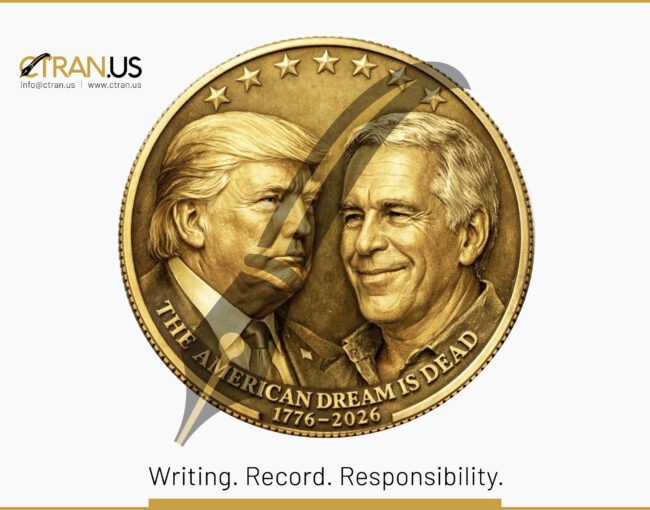
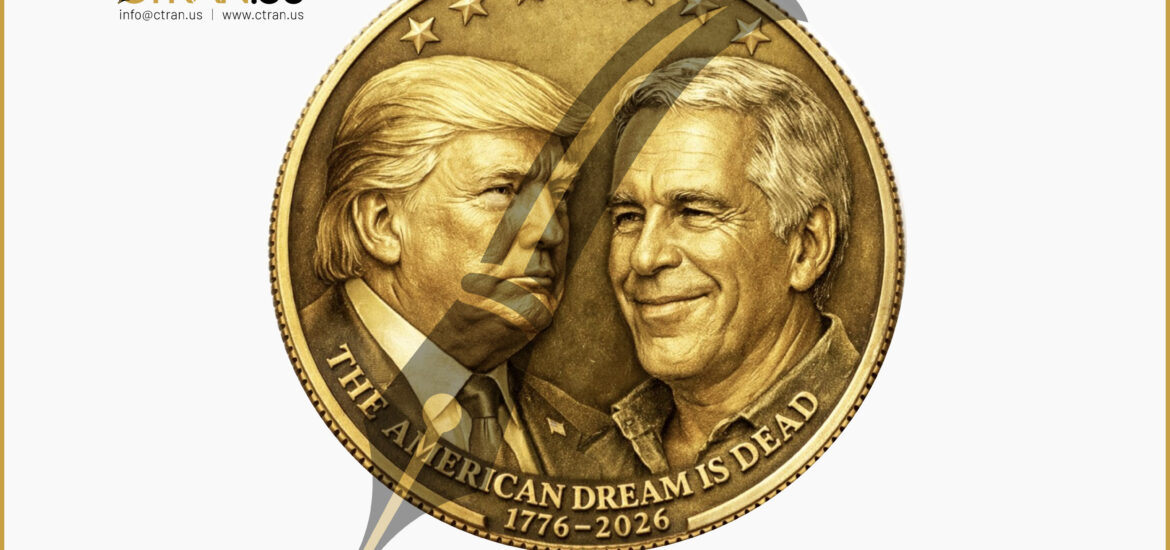
According to a proposal said to have passed through the U.S. Commission of Fine Arts—an agency once staffed by his own appointees—a commemorative gold coin has been designed with his portrait placed at its center.

An interesting choice.

Because while traditional American coins tend to depict figures who have already entered history, this time, history appears to have been invited… a little earlier than expected.

The reaction has not come from just one side.

A group known as Republicans Against Trump labeled it a sign of a “banana republic”—a place where national symbols begin to carry individual faces rather than shared principles.

On social media, public imagination moved even further than the original design:

  • Some merged the coin with the image of Jeffrey Epstein
  • Others turned it into childlike caricature
  • And some compared it to the propaganda aesthetics of North Korea

A coin—yet it becomes a mirror.

Former congressman Adam Kinzinger did not soften his words, calling the design “grasping”—an attempt to hold onto an image, or perhaps… a place in history.

What is notable is that the discomfort does not come solely from opponents, but also from those who once stood on the same side.

But perhaps the larger question is not the coin itself.
It is the boundary.
Between:

  • remembrance and reverence
  • national symbol and personal brand
  • a republic and… something closer to monarchy than many would care to admit

Two hundred years ago, America was built with a very clear fear:
the fear of a king.

Two hundred years later, there is no king.

And yet, from time to time…
there are coins that make people wonder:

Was that fear ever truly gone,
or has it simply… changed its form?

Kharg Island and Global Oil Supply

Kharg – The Bleeding Black Pearl

Kharg – The Bleeding Black Pearl of Persia

By Calvin P. Tran

On the one thousand and second night, when the oil lamps in the palace had burned low and the desert wind drifted through the cold stone corridors, she bowed before the king and began once more:

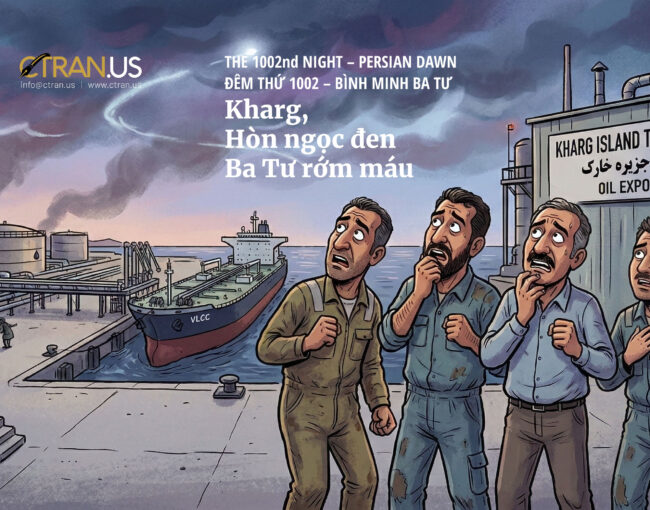
“Your Majesty, tonight’s tale begins on a small island in the Persian Gulf, where the sea is deep blue, yet the earth beneath is as black as tar.
That island is called Kharg Island.”

On the morning of March 14, 2026, as the sun rose over the horizon of the Persian Gulf, the United States Central Command issued a brief statement—yet one that struck the world like a stone cast upon still water:

Ninety military targets on Kharg Island had been precisely hit.

From the sky, missiles fell like spears of fire.
Radar stations, ammunition depots, defensive positions, and military facilities trembled under waves of explosions.

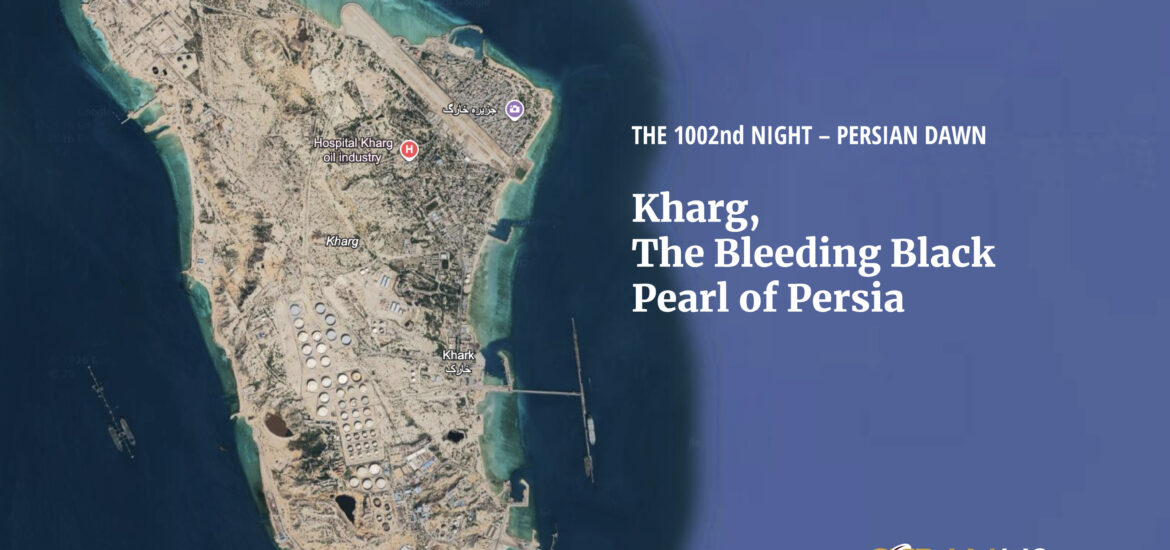
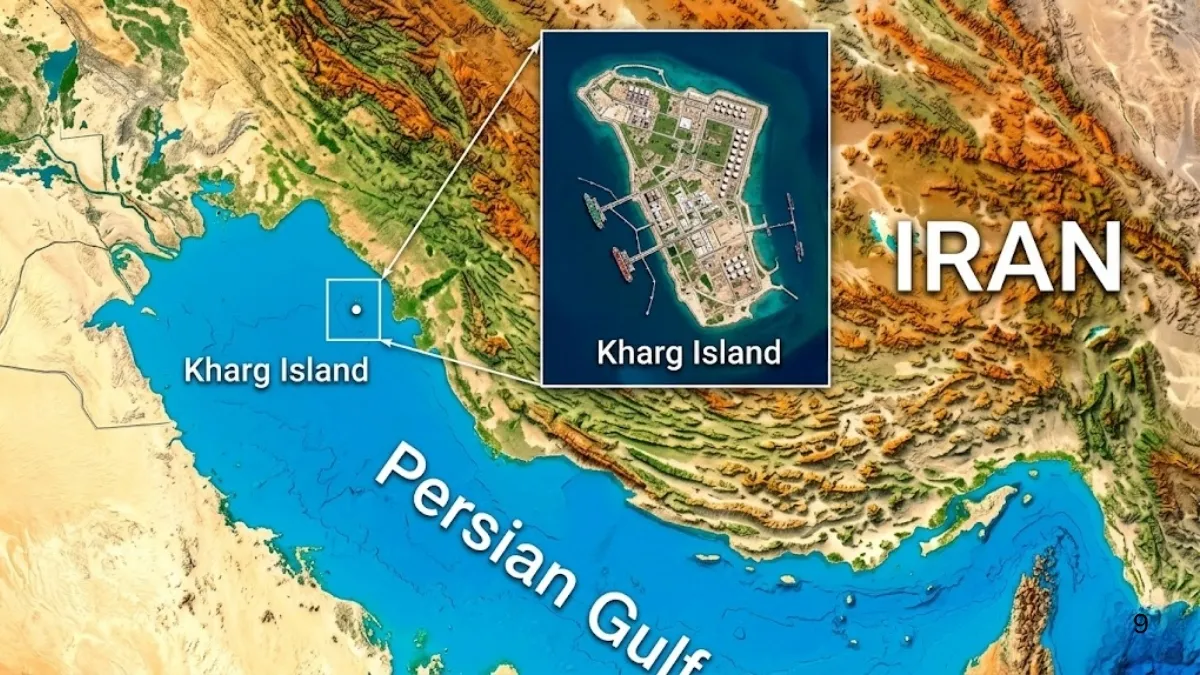
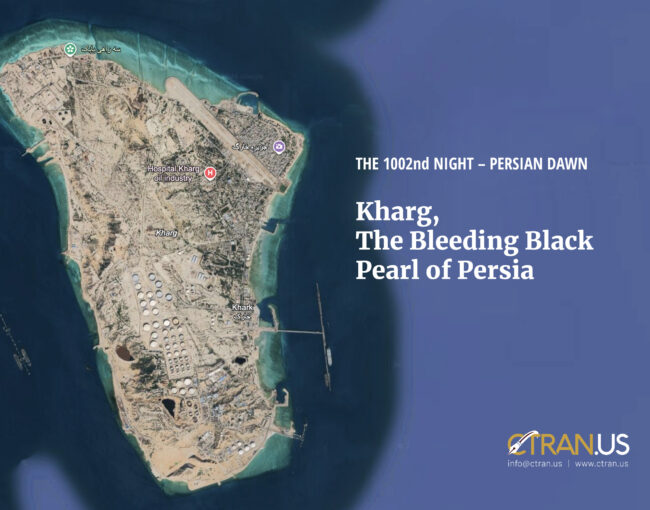
Kharg—an island lying only about 25 kilometers off the coast of Iran—had long been regarded as the lifeline of Persian oil.

But by the afternoon, the story grew colder still.

In an interview with NBC News, U.S. President Donald Trump spoke with a calmness as if describing a routine exercise:

“We have completely destroyed the island.
If we want, we could strike it a few more times for fun.”

He stated that U.S. forces had devastated nearly all military infrastructure on the island—
except for the oil pipelines.

Not out of mercy.
But because rebuilding those pipelines could take years.

Your Majesty,
Kharg Island is not large.
It stretches only about 6 kilometers in length, covering roughly 20 square kilometers—no more than a fragment of coral in the vast sea.

Yet from that small island, nearly 90 percent of Iran’s crude oil exports are pumped into the supertankers anchored offshore.

And so, for many years, oil traders have given Kharg another name:
“the black pearl of Persia.”

Kharg Island, Iran

During the first two weeks of the conflict, which began on February 28, 2026, the United States and Israel had refrained from striking this island.

Not because Kharg was too well defended—
but because a single miscalculation could send shockwaves through the global oil market.

But then, as Your Majesty has seen…
on March 14, that restraint came to an end.

And while the smoke of bombardment had yet to clear over Kharg,
a warning rose from Tehran.

Iranian military spokesperson Ebrahim Yofagari declared that Iran could target ports and harbors in the United Arab Emirates.

For, according to Tehran,
many American missiles had been launched from concealed positions within ports, docks, and shelters inside UAE cities.

Thus, he said,
Iran regarded any strike on those locations as a legitimate act of defending its sovereignty.

Not long after that warning,
a large fire was reported at the Port of Fujairah—one of the UAE’s key oil ports near the Strait of Hormuz.

Local authorities stated that debris from an intercepted drone had fallen into the port,
igniting flames in the night.

She paused for a moment, then spoke softly:

“Your Majesty…
On the map, Kharg is but a small dot upon the sea.
Yet in the age of oil,
there are dots that can shake the entire world.”

Then she lifted her eyes to the king:

“But tonight’s story does not end there…”

When the Courts Must Defend

When the Courts Must Defend the Independence of the Fed

By Calvin P. Tran

A federal judge blocks subpoenas targeting the Federal Reserve, raising deeper questions about political pressure on monetary policy.

For decades, the independence of the U.S. central bank rested less on court rulings than on an unwritten political norm: presidents do not pressure monetary policy.

This week, that tradition had to be defended in a courtroom.

(more…)

Hollywood and the “Loyalty Test”

Hollywood and the “Loyalty Test”

By Calvin P. Tran

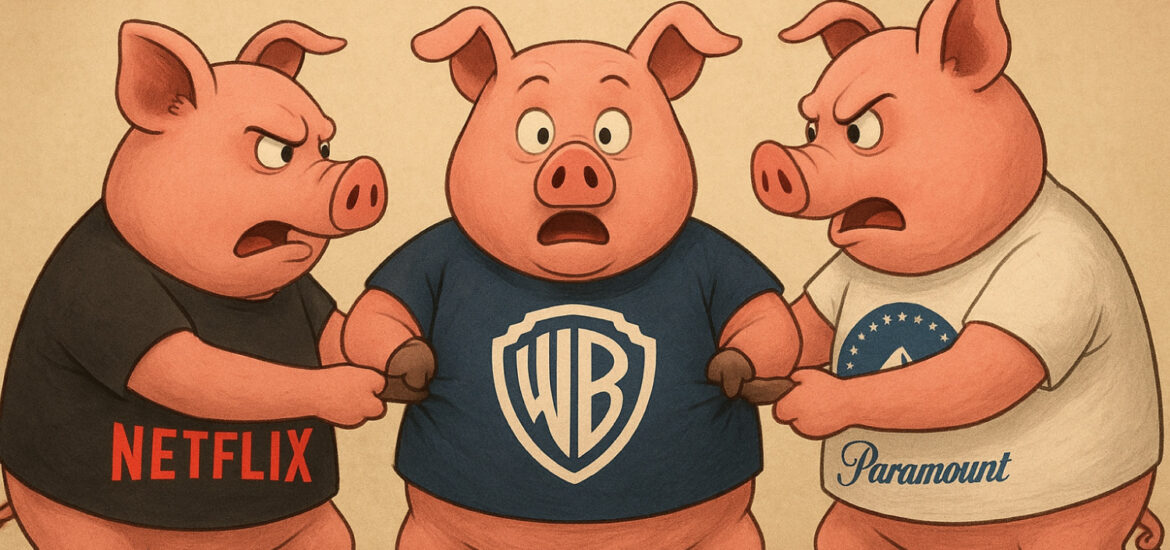
When President Donald Trump publicly urged Netflix to remove Susan Rice from its board — warning that the company would “pay the consequences” if it refused — the episode ceased to concern an $83-billion acquisition.

It revealed something more fragile.

The catalyst was uncomplicated. Trump reposted a denunciation from far-right activist Laura Loomer on Truth Social. Loomer had seized on Rice’s podcast remarks, calling Netflix “anti-American” and “woke” for retaining her, urging the president to “kill the Netflix–Warner Bros. merger now.”

The repost was not accidental.
It was amplification.

Rice was labeled a “racist, Trump Deranged” political hack with “no talent or skills.”

The message was clear enough:
A corporate board seat had become contingent on ideological hygiene.

Thus a merger review turned into a loyalty examination.
And Hollywood — that factory of fiction — was handed a script written in executive ink.

The Inconvenient Resume

Susan Rice is not an obscure name wandering into controversy by chance.

She served as U.S. Ambassador to the United Nations and later as National Security Advisor under President Barack Obama. She later advised President Biden. Her résumé is not decorative. It is institutional.

Corporations do not appoint directors for poetry.
They appoint them for proximity to complexity.

When Netflix reappointed her in 2023 to its nominating and governance committee, it exercised what is ordinarily considered a banal corporate right: the freedom to decide who sits at its table.

In functioning democracies, that decision belongs to shareholders.
Not to the White House.

Yet here, a board appointment was treated less as governance and more as provocation.

Experience became suspicion.
Service became stigma.
Independence became defiance.

When Speech Becomes Subversion

On the podcast Stay Tuned with Preet Bharara, Rice observed that corporations “bending the knee” today might face scrutiny if political winds shift — should Democrats regain leverage in 2026 or 2028.

It was not a decree.
It was not a subpoena.
It was an observation about electoral gravity.

In American life, such commentary is routine.

But routine speech can feel radical to power that hears dissent as insubordination.

And so a podcast became pretext.

The essential question is not whether Rice’s assessment was wise.

It is why a sitting president treats commentary as contamination.

When public office reacts to criticism as though it were a hostile takeover, the issue is no longer speech.
It is sensitivity.

The Merger and the Message

The timing is instructive.

Netflix awaits federal review of its proposed acquisition of Warner Bros. Discovery — a transaction scrutinized by regulators amid a competitive media landscape that includes Paramount Global and Skydance.

Antitrust review is, in theory, statutory.
It is meant to weigh markets, not personalities.

But when “will pay the consequences” enters the vocabulary of review, the grammar shifts.

The market hears something else.

A threat does not require implementation to function.
Its purpose is anticipatory obedience.

In that moment, corporate governance begins to resemble political probation.

Editorial: Power and the Fear of Being Seen

There is an old paradox about authority:
Power rarely fears attack.
It fears exposure.

Attack can be dismissed as hostility.
Exposure demands introspection.

To be criticized is survivable.
To be examined is destabilizing.

When power insists that private institutions cleanse themselves of critics, it is not defending order.
It is defending comfort.

The loyalty test, then, is not about Netflix.

It is about whether proximity to dissent is itself intolerable.

If a board member’s prior service under a different administration is grounds for presidential displeasure, then continuity of government becomes a liability.

And if regulatory discretion coincides with personal irritation, then institutions are quietly instructed to anticipate mood.

This is how systems erode — not through spectacle, but through suggestion.

Not through decrees, but through consequences left undefined.

Hollywood produces dramas about fragile empires.
Yet here, the fragility is not scripted.

It is enacted.

Pettiness as Structure

Stable democracies do not require ideological purification rituals from corporations.

Confident leaders do not equate disagreement with betrayal.

When governance becomes indistinguishable from grievance, the state begins to look less like an institution and more like a personality extended across agencies.

And personalities, unlike constitutions, bruise easily.

In this story, Netflix is incidental.

Susan Rice is incidental.

The merger is incidental.

What is not incidental is the spectacle of executive authority reacting to commentary as though it were defiance.

The stress test is not for a streaming platform.

It is for whether presidential power can endure scrutiny without converting it into leverage.

Because when power cannot tolerate being watched,
it begins to rearrange the room.

And when it rearranges the room,
it calls the new arrangement order.

“Power does not tremble at opposition.
It trembles at inspection.
And when it confuses scrutiny with sabotage,
loyalty becomes its last refuge.”
— Trump, a Curious Tale